
Checking Criminal History in Estill
Begin with the event, not a broad name search. An Estill Police Department report can explain what officers recorded. Estill Municipal Court can confirm a city citation, hearing, or summary criminal matter. The Hampton County Public Index is the next stop when a charge reaches General Sessions. The detention center answers recent local custody questions, while SLED CATCH supplies a statewide name-based repository result. None of these sources replaces the rest.
- Identify whether Estill police, the municipal court, or another agency created the record.
- For an Estill police report, call first, then visit the police counter with photo ID and a case number if one is available.
- Ask the Estill Municipal Court clerk about a city traffic, ordinance, or minor criminal file.
- Use the Hampton County court and detention channels for higher charges, filed county cases, or recent booking status.
- Use SLED CATCH when the question calls for a statewide South Carolina name-based record.
A missing Estill result in one channel does not settle the question. Some Estill municipal matters do not appear in the county Public Index, a new arrest can predate a filed case, and SLED data depends on fingerprint and disposition reporting. Compare the record type and date before drawing a conclusion.
Estill Police Report Copy Rules
Estill publishes unusually clear terms for local police report pickup. A victim receives a report without charge. Another requester pays $3 by check or money order. The police FAQ says cash, debit cards, and credit cards are not accepted for that copy. Those rules concern an Estill police report, not a municipal court copy, a SLED history check, or a Hampton County court document.
| Requester or item | Estill rule |
|---|---|
| Victim report copy | No charge |
| Other report requester | $3 |
| Accepted report payment | Check or money order |
| Not accepted for report copy | Cash, debit card, or credit card |
The official Estill police FAQ is the source for these report terms. The captured page shows why a requester should separate police-copy rules from the court payment methods described elsewhere.
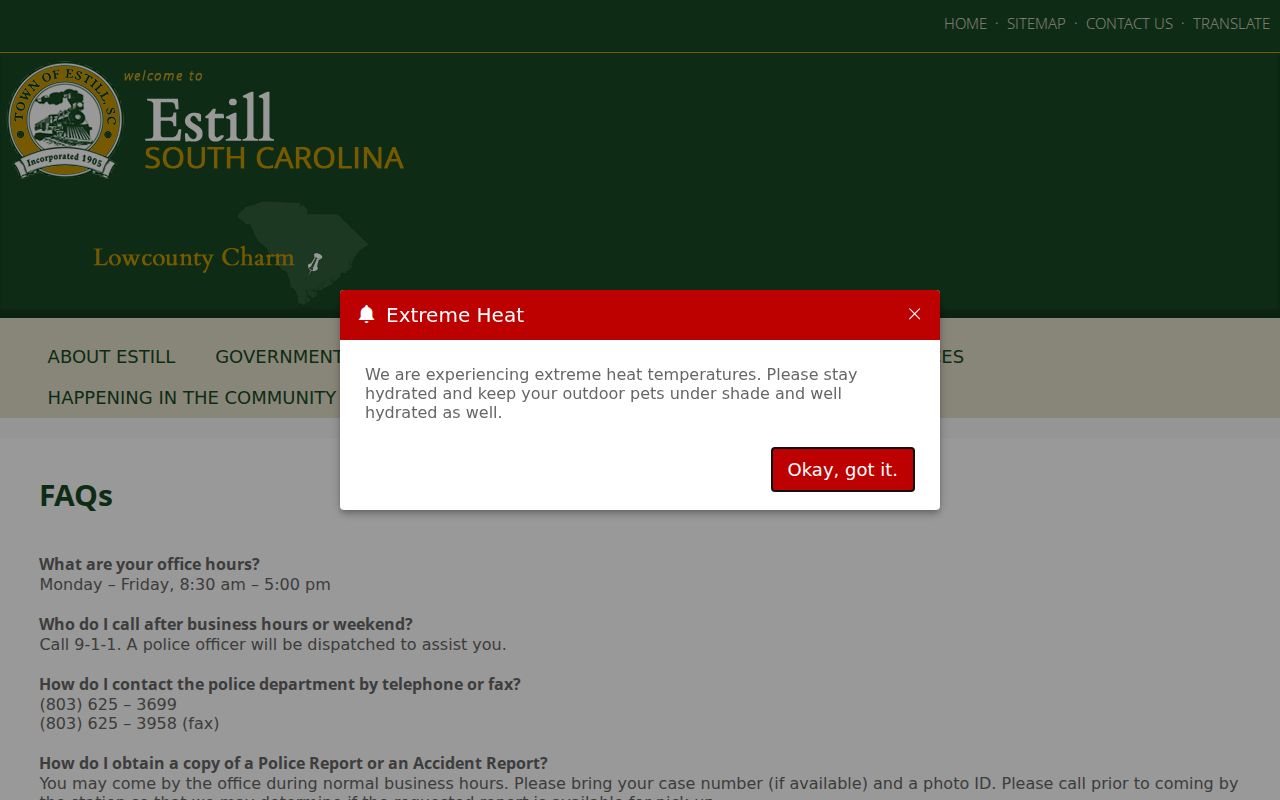
That distinction prevents a wasted trip with the wrong form of payment. Call before pickup in case the record is not ready or access is restricted.
Estill Police Department Records
The Estill Police Department works from the rear of Town Hall at 323 Martin Luther King Jr. Boulevard South, Estill, SC 29918. Its mailing address is P.O. Box 37. The main police number is 803-625-3699, and the fax is 803-625-3958. Chief Chauncey D. Solomon Sr. is listed by the town. The department FAQ gives weekday hours of 8:30 a.m. to 5:00 p.m.
Request an Estill report in person. Bring photo ID and a case number if one is available. Calling ahead is part of Estill's stated process because a report may not yet be complete or ready for release. Estill says police records are generally kept for at least five years. Juvenile reports and sexual-battery reports are not public through this ordinary process.
The town's Estill Police Department profile identifies the office and contact route used for city police records.
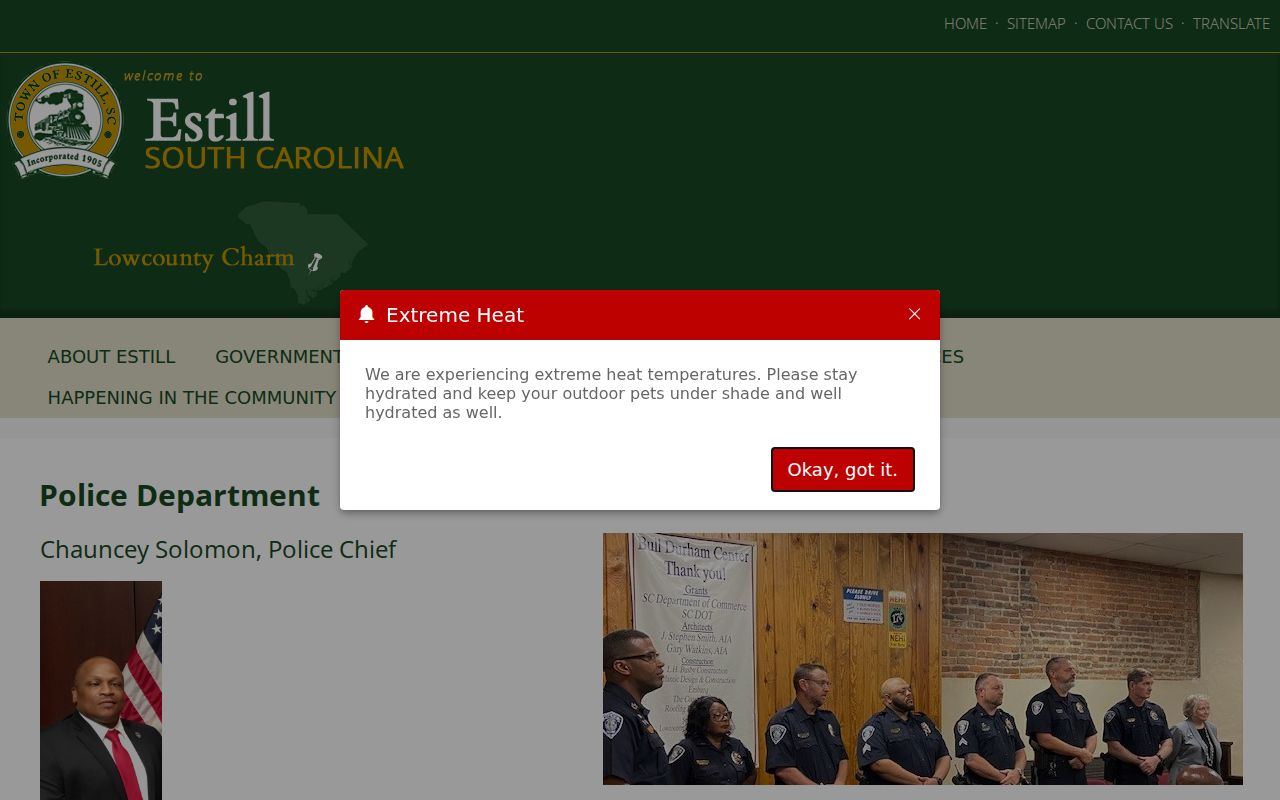
The city counter is the right first source for the narrative made by an Estill officer, but it does not certify the final result of a court case.
Estill Report Pickup Timeline
Estill asks report requesters to allow five to seven business days. That wait reflects the difference between an event and a releasable report. Officers may still need to complete the file, supervisors may need to review it, and state law can limit what the department releases. A call before visiting confirms whether the requested Estill record has reached the pickup stage.
Use concrete details when calling: the incident date and approximate time, location, names involved, and case number if known. Asking for a named existing record is more useful than asking the department to compile a person's whole history. South Carolina FOIA does not require a public body to create a new analysis.
Estill sends requests for a statewide criminal-history check to SLED. That referral is a key boundary. The city can release its own report when allowed, but it does not turn a local report request into a South Carolina repository search. SLED CATCH is broader by geography and thinner in narrative detail.
Note: The five-to-seven-business-day estimate applies to Estill police reports, not to court filings, detention records, or SLED purchases.
Estill Arrests and Bookings
Estill does not publish a city jail. When Estill police take someone into custody and detention is required, the person routes to the Hampton County Detention Center at 409 Cemetery Road in Varnville. That produces two distinct local records. Estill police retain the incident or arrest report, while detention staff create the booking and custody file.
For a recent Estill event, contact the police department for the report and the detention center at 803-914-2223 for current local custody or booking context. A release can remove a person from a current-roster view. A new arrest can also occur before a prosecutor files a General Sessions case. The absence of a current custody result is not proof that no Estill arrest happened.
If prosecution follows, court records become the source for filed charges and outcomes. Summary city matters may stay with Estill Municipal Court, while higher criminal proceedings go to Hampton County General Sessions. Readers tracing that next stage can use the county's criminal court case search explanation for the Public Index and clerk channels.
Estill Citation Appearance Records
An Estill ticket carries a field labeled Court Appearance Required, YES or NO. Read it before treating online payment as a substitute for court. A NO can allow payment under the court's instructions. A YES means the person must appear. Payment is a transaction step, not a search of Estill criminal records and not proof that every court duty has been met.
The municipal court warns that failure to appear usually leads to a bench warrant entered in NCIC. A missed city-court date may not show in a Hampton County General Sessions name search, so the Estill clerk is the direct source for the status of an Estill citation or municipal warrant. Use 803-625-3243 extension 224 and give the ticket or warrant number when possible.
Appearance warning: Paying online does not override a YES in the appearance-required field. Confirm the duty with the Estill Municipal Court clerk.
Municipal Court Records in Estill
Estill Municipal Court is at 323 Martin Luther King Jr. Boulevard South, the same street address used for Town Hall and police operations. The court hears traffic, town ordinance, and minor criminal matters. Judge Loretta B. Beckett is listed. The clerk can be reached at 803-625-3243 extension 224; the fax is 803-625-3106.
Clerk hours are Monday through Thursday from 8:00 a.m. to 4:00 p.m. and Friday from 8:00 a.m. to 2:00 p.m. Court meets on the first and third Wednesdays at 3:00 p.m. The town publishes an online fine and citation payment option, but it is not a public case-record search. Ask the clerk for the specific Estill file or status needed.
| Court Name | Estill Municipal Court |
|---|---|
| Case Types Heard | Traffic, minor criminal, and town ordinance matters |
| Case Lookup Channel | Municipal clerk counter or phone; no published online case search |
| Useful Identifiers | Name, ticket or warrant number, court date, and charge |
| Payments | Cash, money order, cashier's check, or card with service charge; no personal checks |
The official Estill Municipal Court page supplies the court schedule, request rules, and payment limits.
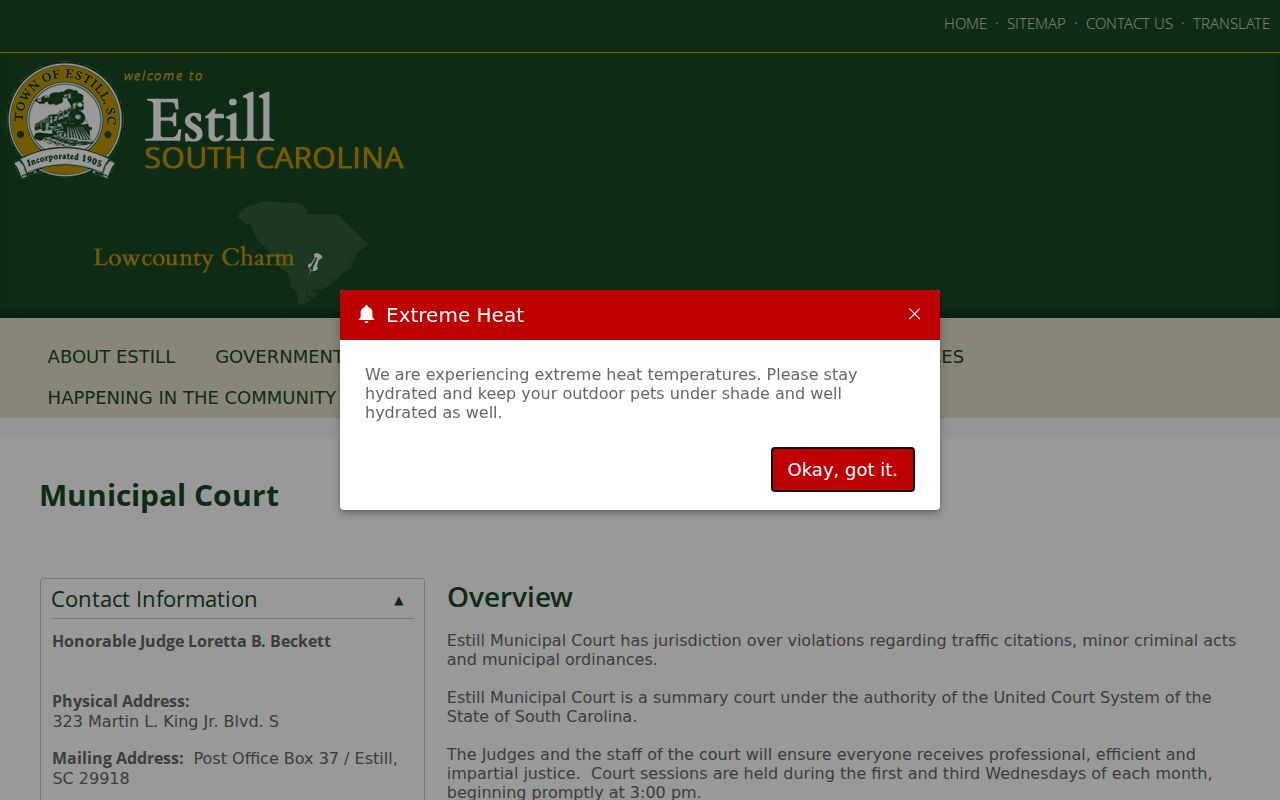
The image reinforces the city-level route: use the court clerk for the file and treat the payment screen only as a way to pay an identified citation.
Estill Court Request Records
A request for a continuance must be written. Estill requires the reason, the requester's name and address, and the ticket or warrant number. Sending the letter does not end the task. The requester must follow up with the court to learn whether the request was granted. Keep a copy of the letter and note when it was sent.
Spanish interpretation requires an advance request. A jury demand must reach the court in writing ten days before trial. An appeal notice must reach the clerk within ten days after the court date. These separate time rules explain why the ticket, court notice, and clerk record should be read together rather than reduced to a single payment status.
- Continuance
- A request to move a scheduled court date; it is not effective unless the court grants it.
- Jury demand
- A written request for jury handling that must meet Estill's stated ten-day deadline.
- Appeal notice
- The written step that must reach the clerk within the published period after court.
- Bench warrant
- Court process that may issue after a failure to appear.
Each item creates or changes a court record. The clerk, not the payment vendor, can confirm whether the Estill file reflects the request or deadline.
Where Estill Records Go
An Estill event can create several records with different custodians. Police make the report. County detention makes a booking file if custody follows. Estill Municipal Court keeps summary city matters. Hampton County General Sessions records higher filed charges and final court events. SLED joins fingerprint-linked arrest cycles and reported dispositions in the state repository.
Record flow: Estill Police Department › Hampton County Courts › South Carolina Law Enforcement Division
This flow is not always instant or complete. A charge may change after arrest. A disposition may reach SLED later, and a non-fingerprinted event may not link correctly. The Hampton County Public Index can show filed counts and docket events that a city report cannot, while the city report may describe facts that do not appear in the index.
For Estill criminal records, use the most recent custodian first. Then compare the next stage. That method preserves the difference between an allegation, a booking, a filed charge, and a final disposition.
Estill Payment Records Are Limited
Estill accepts cash, money order, or cashier's check for court payments. Card payments carry a service charge, and personal checks are not accepted. These terms differ from the police report-copy rules, where the town says to use check or money order and rejects cash and cards. Use the right set of rules for the right Estill counter.
An online receipt shows a payment transaction. It does not provide a docket, police narrative, warrant history, or statewide criminal record. If the issue is whether an Estill case was dismissed, appealed, or marked complete, contact the municipal clerk and ask about the identified file.
Note: Keep payment confirmation, but verify the case status separately when appearance, warrant, appeal, or continuance questions remain.
Public Access Rules in Estill
South Carolina FOIA broadly defines public records and gives a route to inspect or copy existing city records. A narrow Estill request should name the report or item sought, give the event date and location, and include the case number when known. The law does not require Estill to create a new history report or research every record tied to a name.
Police material may be withheld or redacted when release would interfere with enforcement, invade privacy, expose a confidential source or technique, harm a fair trial, or endanger safety. Juvenile records are outside the ordinary adult-public route. Sealed or expunged records should not be treated as public merely because an old index entry once appeared.
Key Statutes:
South Carolina FOIA, S.C. Code Title 30, Chapter 4 defines public records and governs inspection, response times, fees, and exemptions.
S.C. Code §30-4-40(a)(3) permits protection of specified law-enforcement material when release would cause a listed harm.
S.C. Code §23-3-115 governs SLED criminal-history dissemination rather than ordinary city report access.
Estill Justice Records Through Time
Estill's local history gives its record system a physical context. The town grew from Lawtonville after the Civil War campaign destroyed that earlier settlement and the Augusta-Savannah rail route shifted development. Estill incorporated in 1905 and took its name from Col. John Holbrook Estill. These facts help explain why town records, county court files, and state records sit in separate layers.
The Bull Durham Center began as a cotton warehouse in 1910. It was deeded to the town in 1994 and rededicated in 2009. A reconstruction of the first Town Hall and jail became the Estill Museum in 2010. That museum is a civic landmark, not the current police-record counter or municipal court.
The official Estill history page documents the railroad-era town and its municipal landmarks.
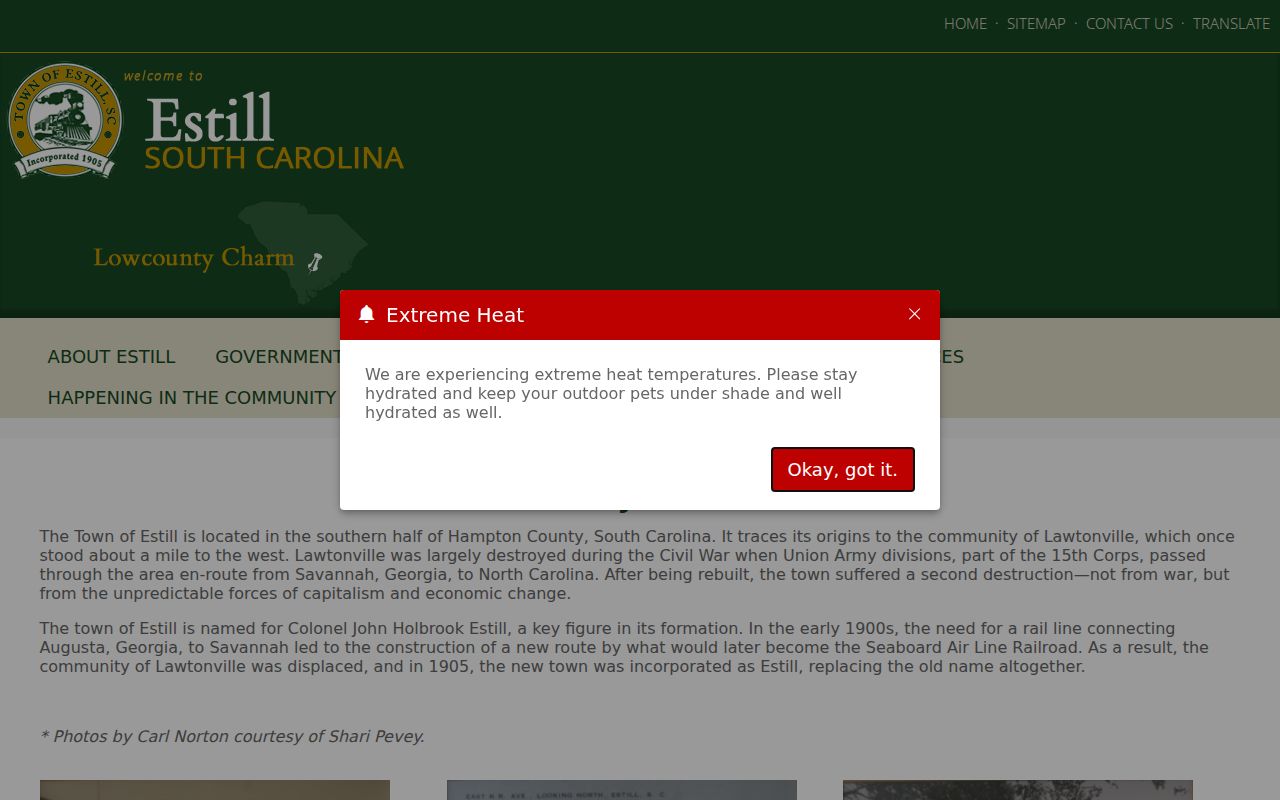
The historic view makes the present division clearer: current Estill criminal records come from the police counter, municipal clerk, county custodians, and SLED, not from one old town archive.