
Hampton County Criminal Court Cases
Hampton County General Sessions is the Circuit Court criminal docket for felony and other non-summary prosecutions. The Clerk of Court accepts criminal warrants, sends warrant details to the Fourteenth Circuit Solicitor for indictment work, handles bond-related money and fees, and prepares the file after an indictment number is assigned. The clerk then updates the Hampton County court file after disposition and records court fines and fees. That lifecycle is why a General Sessions file can show the prosecutor's filed count, motions, plea or trial result, and sentence rather than just the allegation made at arrest.
Lower courts keep separate records. Hampton County Bond Court handles initial bond hearings at the Law Enforcement Center. Estill Magistrate Court handles summary criminal and traffic matters plus preliminary functions. The municipal courts in Hampton, Estill, and Varnville keep city ordinance, traffic, and minor criminal dockets. Magistrate trial jurisdiction is limited to offenses punishable by no more than $500 plus assessments and costs, 30 days, or both. Because only some municipal dockets join the statewide index, a missing Hampton County search result can require a direct call to the town court.
Hampton County Courts by Charge
The Hampton County court named on a warrant, citation, or docket controls where the record must be requested. The Hampton County Court Services description explains the local General Sessions role. Its published view also gives useful context for the courthouse-based case system.
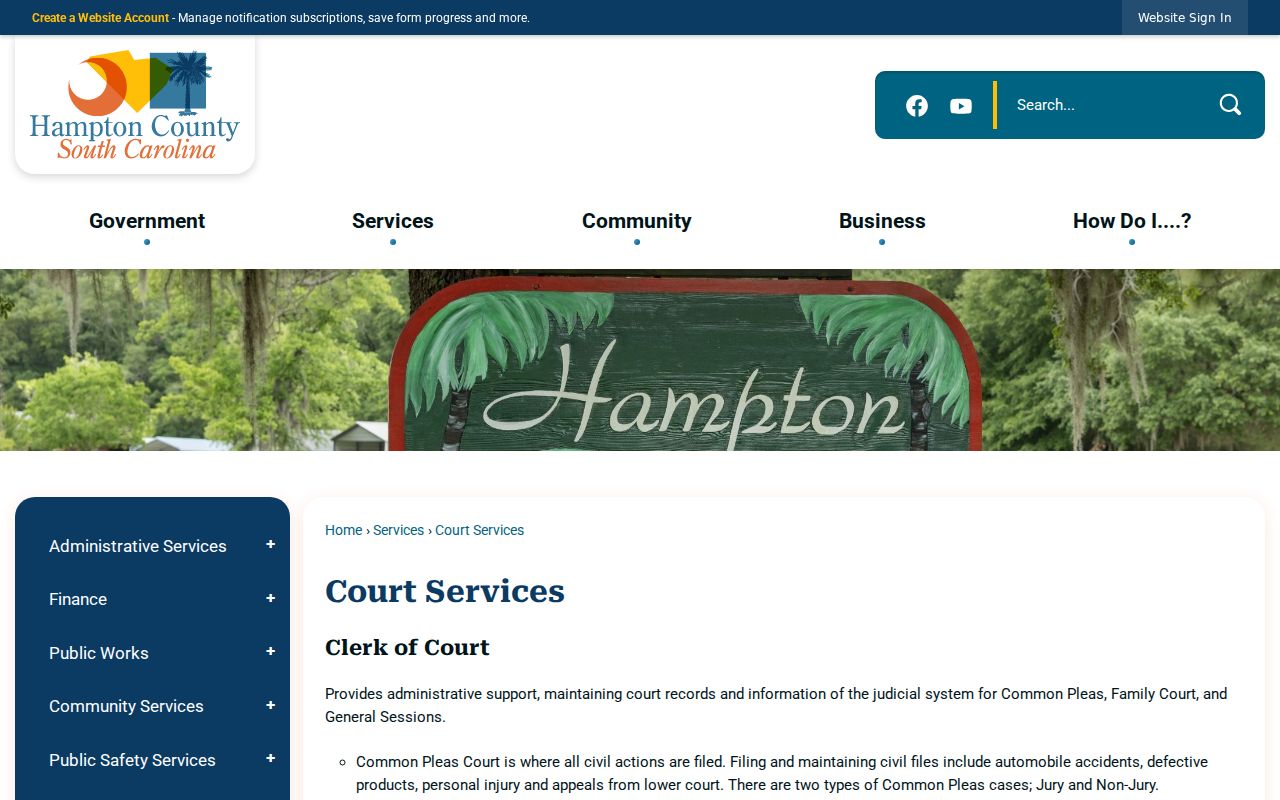
The image supports a key routing rule: use General Sessions for the higher criminal prosecution, but use the named lower court when the charge stays within its jurisdiction.
General Sessions Clerk
Hampton County Courthouse
1 Courthouse Square / Elm Street
Hampton, SC 29924
803-914-2250
Estill Magistrate Court
259 Martin Luther King Jr. Blvd.
Estill, SC 29918
803-625-3232
Searching Hampton County Case Records
The South Carolina Judicial Branch Case Records Search routes readers to the Hampton County Public Index. The official walkthrough says to choose the county, accept the disclaimer, complete the security-code screen, and click Validate. Pressing Enter does not complete validation. Start with one or two filters because all chosen criteria are combined. A case number is the cleanest match. A partial beginning-name search can help when the exact spelling is uncertain, while Contains finds the entered term anywhere in the last-name or business field.
- Select Hampton County at the Judicial Branch gateway, read the notice, and click Accept.
- Complete the security code and click Validate rather than pressing Enter.
- Search by case number when known, or begin with last name and first name.
- Open the linked case number, then review Actions, status, disposition dates, and Financials where enabled.
- Use the case number to ask the General Sessions Clerk for any filed page or certified document not shown online.
| Field label | Type | Required | Use |
|---|---|---|---|
| Last Name | Text | Conditional | Defendant surname; pair with first name when possible |
| First Name | Text | No | Narrows common surnames |
| Middle Name | Text | No | May not appear in every file |
| Case Number | Text | Alternative | Best exact lookup when known |
| Court Agency / Case Type | Filter | No | Choices vary with the selected module |
| Date Range | Date | No | Limits filing or event dates where available |
Hampton County Index Search Traps
The Hampton County security gate is only the first point that can trip up a court search. The portal requires JavaScript, cookies, and pop-ups. Search filters also work together, so too many fields can hide a valid result. Begin broadly, compare candidate case numbers and courts, then narrow by date or case type. Results may list linked parties and case numbers. Double-arrow controls can expand parties, and Switch View can place available details on one scrolling screen.
Bold tabs may expose Actions and Financials. Actions form the docket timeline. Financials may show fines, fees, and payments. A document icon opens an attachment only where imaging is supported. Its absence does not mean the filing is gone. It means the requester may need the clerk. Starting January 1, 2026, home addresses are suppressed across Public Index cases, so older expectations about address display no longer match the current interface.
Note: A blank image tab does not erase the Hampton County case; use its case number to request the identified filing.
Inside a Hampton County Case File
A Hampton County case file follows a prosecution. It can be compared with a SLED rap sheet, which follows reported fingerprint events across the state, and a booking record, which follows one custody intake. These sources can disagree for valid reasons. Charges may be amended, dismissed, or combined. Court and state systems also update on different schedules. The filed Hampton County court record is the best place to confirm what the prosecutor charged and how the judge or jury resolved it.
| Case Number and Court | The linked identifier, court agency, court type, and case type or subtype. |
|---|---|
| Parties | Party records and roles available through the case-detail view. |
| Filed Charge | The prosecution count, which may differ from the arresting agency's first allegation. |
| Docket Actions | A chronological list of hearings, motions, pleas, trial events, and other entries. |
| Financials | Fines, fees, and payments where the tab is enabled. |
| Disposition and Sentence | The recorded outcome, disposition date, judgment, and sentence information when entered. |
| Documents | Images where supported; not every Hampton County pleading is available online. |
Hampton County Bond Court Timing
The county's official court-types page places Bond Court at the detention complex and publishes sessions twice each day. The schedule is 9:00 a.m. and 4:00 p.m. on weekdays, then 8:00 a.m. and 4:00 p.m. on weekends and holidays.
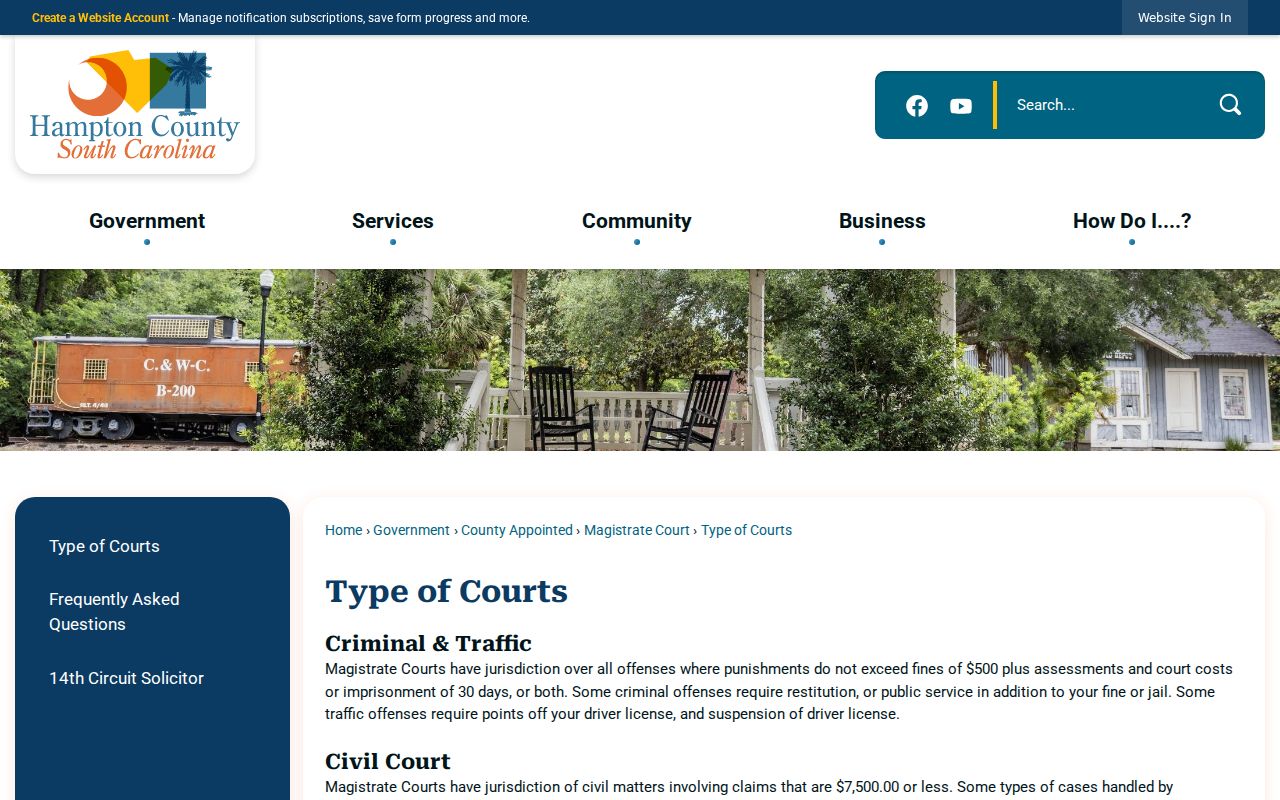
This view helps explain why the bond record is an early court document, while the later indictment and disposition belong to the General Sessions prosecution file.
How a Criminal Case Moves
For a bailable offense, South Carolina law calls for a bond hearing within 24 hours of arrest. When the charge exceeds magistrate trial power, a defendant may demand a preliminary hearing in writing within 20 days of the bond hearing. The warrant then passes through the General Sessions Clerk to the Fourteenth Circuit Solicitor. A grand jury true bill means the indictment may proceed. A no bill means the grand jury did not indict. Arraignment, motions, a plea or jury trial, disposition, and sentencing follow as the case requires.
Case flow: Charges Filed › Arraignment › Pretrial › Plea or Trial › Disposition › Sentencing
After the outcome, the Hampton County clerk updates the case and financial record. The disposition should also return to SLED. A missing or unmatched submission can leave the state criminal-history response without the court's final result, which is another reason to confirm an open question in the Hampton County case file.
Hampton County Pleadings and Copies
When the Hampton County index shows a docket but no document image, write down the case number and exact filing. The Clerk of Court does not conduct research for a requester. Staff can provide an identified filed document for $0.50 per page. Certification costs $1 per document in addition to the copy charge. A clerk certificate confirms something filed of record; it is not a general criminal-history check.
Call 803-914-2250 before relying on fax because the county and judiciary pages publish different fax numbers. Published counter hours are Monday through Thursday from 8:00 a.m. to 5:00 p.m. and Friday from 8:00 a.m. to 4:00 p.m. Ask for the General Sessions counter. Hampton criminal proceedings are digitally recorded under a Supreme Court order, but the paper transcript remains the official transcript under Rule 607 SCACR. An audio recording and an official transcript are therefore not interchangeable requests.
For a broader view of how a booking turns into filed charges, the Hampton County arrest lookup explains the separate agency and detention records.
Federal Cases Beyond Hampton County
The PACER service is the federal docket gateway, not part of the Hampton County Public Index. Hampton County lies in the U.S. District Court for the District of South Carolina.
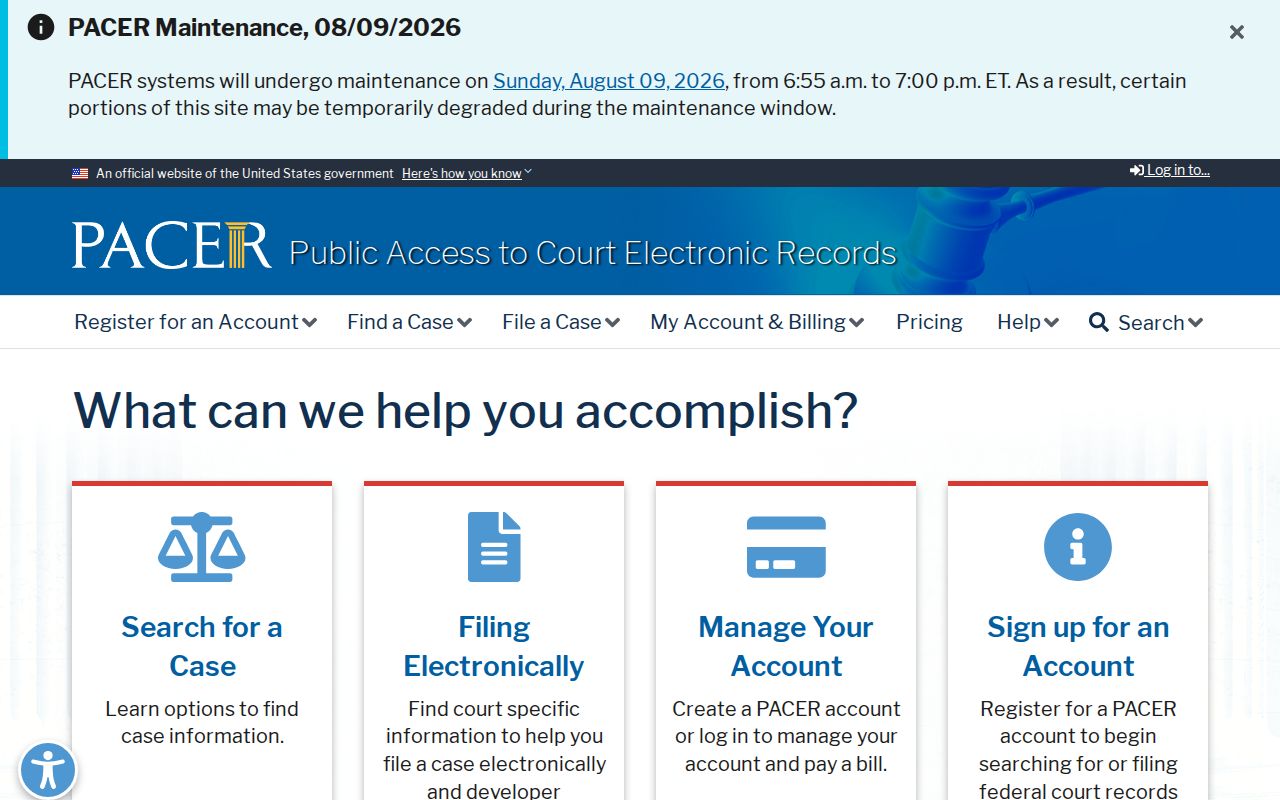
The PACER image marks the point where a reader should leave the county system for a federal prosecution and use the court named on the federal filing.
The District of South Carolina website identifies the federal court system and its offices.
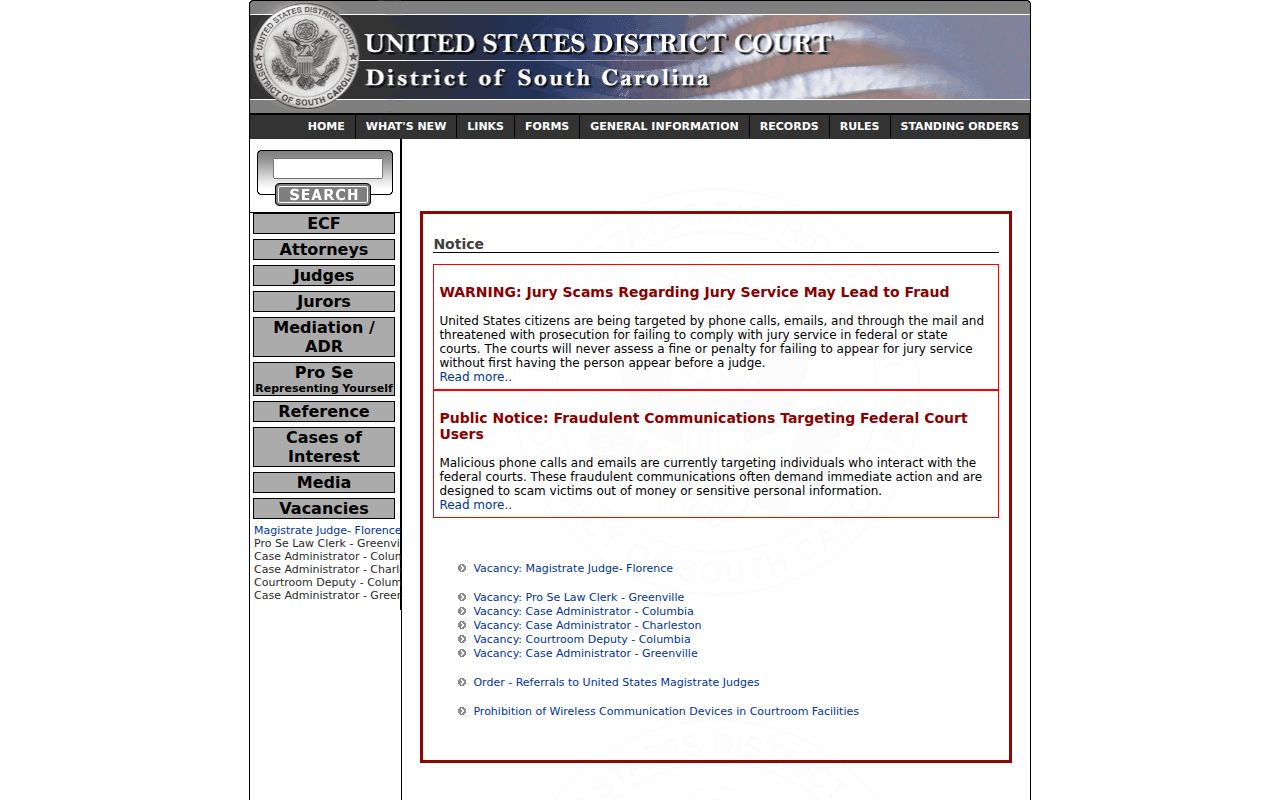
Together, the two official sources separate federal dockets from Hampton County General Sessions records and prevent a county search from being treated as complete for a federal case.
Case Record Access & Restrictions
South Carolina FOIA defines public records broadly, but court access also follows judicial rules and clerk practices. Sealed, expunged, confidential, and juvenile material is not available through the ordinary adult public workflow. Victim information, private identifiers, and law-enforcement material may be withheld or redacted where release would invade privacy, endanger someone, expose a confidential source or method, impair a fair trial, or interfere with enforcement. An online redaction does not imply that the rest of the Hampton County file is missing.
The safest response to an absent result is to verify the court and record type. Check the named magistrate or municipal court when the matter did not enter General Sessions. Contact the clerk when an older or non-imaged file is identified. Never treat a no-result screen as proof that no case exists. The Public Index is an access tool, while the clerk remains the custodian of the filed Hampton County criminal court case.